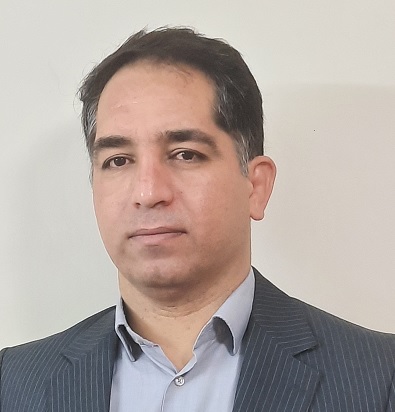
Dr. Ali Ahmadi a.ahmadi@iut.ac.ir Google Scholar Office Department of Mining Engineering, Isfahan University of Technology, Isfahan, Iran, P.O.Box: 84156-83111 Phone (+98)31-33915113 Fax (+98)31-33912776 Positions Professor of Mineral Processing Engineering Research Interests Hydrometallurgical processes (chemical bacterial and electrochemical leaching; Solvent Extraction Adsorption/Ion Exchange Electrowinning/Refining) Flotation & Surface Chemistry Design Troubleshooting and Optimisation of Mineral Processing Plants Dr. Ali Ahmadi type: Journal Title Conference / Journal Date تاثير نانوحباب/اسپارجر ازون، آب اكسيژنه و كاتيون هاي منگنز بر انحلال كالكوپيريت در محلول رقيق اسيد سولفوريك CANADIAN METALLURGICAL QUARTERLY 2026-04 Effects of saponification and synergism on the solvent extraction of rare earth elements from a sulfate leach solution of a low-grade titaniferous magnetite ore SEPARATION SCIENCE AND TECHNOLOGY 2026-01 Recovery of platinum from spent reforming catalysts by coupled leaching and solvent extraction using deep eutectic solvents INORGANIC CHEMISTRY COMMUNICATIONS 2026-01 Beneficiation of Low-Grade Iron Ore Containing Carbonate Through Magnetizing Roasting Followed by Low-Intensity Magnetic Separation Journal of Sustainable Metallurgy 2025-09 The processing of a low-grade gold refractory sulfide ore by flotation- biooxidation- cyanidation route International Journal of Mining and Geo-Engineering 2025-09 A review of fine particle flotation: mechanistic insights and advances MINERALS ENGINEERING 2025-08 Optimizing Fine Copper and Zinc Recovery: A Flocculant-Assisted Flotation Approach Using Box-Behnken Design Results in Engineering 2025-06 Exploring salting-out phenomena in air-assisted solvent extraction of Cu SEPARATION SCIENCE AND TECHNOLOGY 2025-03 Application of acid mine drainage for the biooxidation of a high-grade refractory sulfide gold ore Environmental Earth Sciences 2025-01 Direct Synthesis of Nickel Oxide Nanoparticles from Pregnant Leach Solution by Using Electrodeionization and Fenton Processes in the Presence of EDTA INORGANIC CHEMISTRY COMMUNICATIONS 2024-10